Akira Kurosawa etiketine sahip kayıtlar gösteriliyor. Tüm kayıtları göster

4 Ağustos 2011 Perşembe

GREAT DIRECTORS MEDLY : AKIRA KUROSAWA - "RED BEARD"

Ok, last Kurosawa for a while, I promise. This, I have to observe, is for the more discerning viewer. Point one, it is three hours long – and that in itself puts off some people. Point two; this three hour film is rather slow moving. But as with most Kurosawa films, it provides us with an unexpected and informative view of Medieval Japan, delicate emotions and simply wonderful photography. You just have to be prepared to patiently watch the film, look for and be delighted by the little gems you find scattered around in it. If you feel you’re able to do this, you’re definitely on to the right film.
A young doctor arrives at a out of the way clinic in Medieval Japan. The young doctor is an ambitious young man, full of hopes of becoming the Shogun’s personal doctor one day. He is versed in the latest western developments in medicine. The clinic on the other hand, is desperately under-funded. It relies chiefly on Japanese medicine, is understaffed and the patients themselves are often desperately poor. Thus the young doctor feels, and in fact is, most exceedingly out of place there. Upon arrival the young man thinks he is just paying a courtesy visit for his father. Red Beard, the surly head doctor of the clinic quickly puts him right. He is there to work, indefinitely. The young doctor revolts. He first is sure there is some kind of mistake, but he is quickly set right. Then he has another idea, he will make himself such a nuisance that Red Beard will fire him. He sets about this, but after a while, his doctors’ instincts get the better of him. Little by little, and almost despite himself he gets immersed in day to day life in the clinic. Who knows, maybe Red Beard has more to teach him than he initially thought.
This is, of course, a typical “maturing youngster” movie. But don’t sneer at it because it is typical. You see the way I see it, a film is a classic mainly if its topic is still relevant today. And although Medieval Japan is quite far away from my personal here and now, the main topic is actually pretty damn relevant. Think about when you first started work. You were fresh out of school, young, arrogant… You reckoned you knew it all, you reckoned you deserved to run the bleeping company. You hated your “first rung of the ladder” job, it was under you. Heck, I even know people who went down the “fine, I’ll get myself fired” route. But then? You saw the value of experience. You learnt. Important things happened to you, you developed… The sky’s the limit as to how the story continues, but you know what I mean… You see the parallelisms, right? Of course, the beauty of staging this in a hospital is (apart from it being a very original setting) is the profusion of people there. It is a clinic for poor people, so the stories are sad, striking, laced with death sometimes, recovery and happiness other times, the possibilities are endless. In short a very striking and intelligent film that you may well find something you sympathize with in… And of course brilliant photography, so beautiful and so clever. If you do watch the film, please note the sequence where the mad woman approaches the intern reclining in the hospital… My personal favorite…

7 Temmuz 2011 Perşembe

BACK TO THE MYTHICAL ORIENT : "IKURU / TO LIVE"

Ok, you may or may not have noticed that I have, these days, developed a “thing” about Akira Kurosawa. That is partly because I have acquired a rather large box set of his collective works. It’s not that I feel I HAVE to write about his stuff, it’s just that every single thing he does is so good! Well, since I am simply bubbling with Akira Kurosawa’s I want to talk about and this is “Asian Promises” week, I thought it only fitting that we should talk about Ikuru here. Not one of Kurosawa’s most famous films – which is why I want to talk about it here. It avoids Kurosawa’s usual topics, i.e. Japan of the Middle ages, and focuses on more up to date and philosophical topics such as work life, bureaucracy and well. The meaning of life… I LOVED this one, it is possibly my favorite Kurosawa so far…
Now, even if you don’t know Watanabe san personally, you definitely know someone like him. He is the head of a government office and has worked in the same office for 30 years. He has never missed a day of work. He never does anything outside of his daily routine. Even his family, his brother and his son (who lives with him with his wife) don’t know much about him – there is nothing much to know! Watanabe san is going through life in this semi-conscious state and not particularly considering doing anything about it until he is diagnosed with stomach cancer. The cancer is advanced and incurable. Watanabe san has no more than 6 months to live. At which point the old man realizes he has no idea how to live. He has, to all intents and purposes, never lived in his life… If he understands nothing else, Mr. Watanabe does see that this is his last chance to learn. So he drops everything and sets about finding out. Will he find the answer? One thing you can be sure of, his quest will astonish those around him in the remaining days of his life and after his death…
Now, for all intents of purposes this does look like a ‘50s version of “Eat, Pray, Love”, right? Wrong. Never underestimate the switch of perspective brought by the different geography. This is not a story about embracing life Julia Roberts style, or going through a series of amusing scrapes like “The Bucket List”, this is the story of a man clutching desperately at the few remaining days of his life, doubled over not only by the pain of the cancer but the pain brought on by the knowledge that he has wasted over 30 years of his life and now he only has a few months left. But it is not a bitter film either. Sad, yes. But also constructive. Watanabe is sad, but he is also desperately seeking an answer. And as we all know, people who truly seek tend to find.
And of course there is Kurosawa’s masterly touch. Black and white film can, in its composition alone convey so much emotion don’t you find? Especially in the hands of a master like Kurosawa. His mastery and imagination alone makes the film a joy to watch, add to that the philosophical nature of the film itself and it somehow feels more like a portrait and less a film… That sounds odd but you know what I mean… Not to be missed.

16 Haziran 2011 Perşembe

MEET AN UNLIKELY HERO : "YOJINBO"

I now invite you to take a step back in time – in more senses than one. First of all, we are back in the ‘60s because we are about to “view” the work of master Japanese director Akira Kurosawa. As far as the storyline goes, we go back even further, to 19th century Japan. If ever there was a schism with day to day life ladies and gents, we are standing right upon it so to speak. Because this is what this film is, a little bit of fun and escapism mixed with a little bit of class and history.
Sanjuro (the charismatic Toshiro Mifune, one of Kurosawa’s favorite actors, for very good reason I might add) is a wandering samurai and a hired sword. He is a master swordsman and therefore in those troubled and dangerous times, unlike most people, he is able to do whatever he likes… On his travels, he happens across a small and very poor village. This little village is in trouble. The son of the old “patron”, who used to run the village, has broken away from his father with his two brothers and has started a rival gang of his own. The war of the two gangs is wreaking havoc on the poverty stricken villagers and the only person actually profiting from the whole thing is the undertaker. Sanjuro decides that this cannot go on and that he must put this mess to rights. Clean-up won’t be pretty by any means, but one thing you can be sure of, Sanjuro will use his own unique methods to do so…
I’m not sure if I even need to point out how much this film has in common with the genre we commonly call a “western” today. To the point that famous spaghetti western director Sergio Leone was greatly impressed by Mifune’s character Sanjuro. It’s all too familiar isn’t it though – at first glance, anyway? A lawless town, rival gangs – full, of course, of dangerous men escaping from the law – the people caught in the middle of them. The nameless tall, dark stranger arriving in town to put things right… Even the joke of the undertaker loving the whole thing can be found in Lucky Luke comics, as people old enough (i.e. me) can testify. Well, if you think you’ve seen it all before, look again. Yes, Yojinbo is a Kurosawa and a genre we have seen before, but by no means does it take itself too seriously. The opening credits and the upbeat music set the tone, and scattered throughout, there are subtle jokes, placed in a way so as to compliment the whole plot without taking it over ,in a way only Asian sensitivity can. I mean, if you ‘re talking about a film that depends so much on “believing” in the goings on (small matters like Sanjuro being able to kill 10 men in 10 seconds) if it takes itself too seriously, you end up just not taking it seriously at all. If, however, the film takes the mickey out of itself ever so slightly, things are sort of… You know, balanced out. The rival gangs and gang members are priceless in many ways and Sanjuro laughs openly at the absurdity of some situations, inviting us to do the same. Then, when our perspective is seemingly closer to his, we can forgive his killing 10 men in 10 seconds. He’s “our guy” in the film, we can cut him some slack.
In short, Yojinbo is a really fun adventure. It is also technically the film I should have mentioned BEFORE Sanjuro that I posted last week - Sanjuro is actually the further aventures of the character... I mean storyline-wise there is no harm in watching one or the other first but one should respect chronology whenever one can I feel - I appologise for the confusion anyway =)

A CLASSIC FROM A MASTER : "SEVEN SAMURAI"

This is one of “those” films really, isn’t it? I find it so hard to sit down and write about epics and really big time classics to the point that I have omitted some of them from the blog. One feels really put on the spot light when writing about a film so many people like so much. Not necessarily because one hasn’t enjoyed it oneself, quite the contrary. One is afraid of somehow “doing an injustice” to the film even if one means well. But I feel I must mention Seven Samurai. Samurai films have kinda died out these days… Well, not died out exactly but they have fallen, shall we say, in the list of popular genres. It is not one of my favorite genres, not by far, but I do believe it deserves a certain amount of respect, especially where the works of masters such as Akira Kurosawa are concerned. And where classics like Seven Samurai are concerned, I believe they deserve remembering once in a while. So, in the spirit of not letting the film gather dust in a corner, here goes…
We are transported to 16th century Japan. Being a farmer is tough in those days. One must work hard to get ones living from the earth. The rewards are meager but will help one get by, unless, of course, the bandits come. This particular village is in deep, deep trouble. A band of 40 bandits, armed to the teeth and able fighters have made a habit of “visiting” the village, usually just after harvest. They take almost the entire harvest – and sometimes more besides – leaving the poor farmers on the very brink of abject poverty. In their desperation they seek the advice of the “Old Man” of the village. “Find samurai to defend us” he tells them. “Hungry samurai, for we have nothing but rice to feed them with.” So four of the farmers set out to the city to locate the “hungry samurai”. The question is, will they be able to find samurai willing to risk so much for so little reward? And will the untrained, frightened farmers be able to get into shape and defend themselves from the attacks?
Ok, so needless to say the answer is yes, they do find people who agree to defend them. Seven people all in all (as you may have gathered). The seven will then come to the village, and train the villagers to fight, really, truly fight. The beauty of this film is indeed multi-tiered. First of all the seven samurai. None of them are stereotypes; each and every one has his own unique character and contribution to the team. The fighting sequences are, as you can imagine, quite savage. And the results are not always merely a joyful victory. But the entire film is laced with, well, first of all humor in the true sense (which makes sense to me, in life one can always find something to laugh at so long as you look hard enough – such is the beauty of life) and then, good humor. The good humor of the samurai who know what they are doing is right and who work tirelessly towards their goal.
And then, of course, there are the villagers. It is a very good study of human nature in general. And I am no expert on 16th century Japan but it is definitely a good study of people living in small, poor communities. They are, unwilling to learn, unwilling to accept new ways and “strangers” into their midst and very stuck in the ways of the past. Even the samurai they themselves begged to come are not worthy of their trust. One cannot entirely blame them either though; this comes with a tough life. The question is whether the samurai will be able to gain enough of their trust to train them for the battle ahead. And how well the farmers will do on the day of the battle…
Naturally all of the above can well be allegories of life. Including an attitude of apparent ingratitude seen in the will to throw oneself into life without looking back once the “bad things” have gone away. I will not say it’s ideal, but it is the way life is…

AN ADAPTATION - THOUGH NOT THE SORT YOU MIGHT EXPECT... "THRONE OF BLOOD / SPIDERWEB CASTLE"

Ok, so, this blog is a blog by a cinephile for other (potential) cinephiles. Not that you need any depth of knowledge concerning the cinema to read this blog, I have done my best to make sure of that… However, I do assume things sometimes. And I assume we have all heard of Shakespeare, right? Right. Phew. Now, the play I have in mind is Macbeth. But what, I hear you enquire, has that got to do with a week where the apparent theme has been the works of Akira Kurosawa? Well, the thing is I am not thinking of an exact replica of Macbeth, but an adaptation. By Akira Kurosawa. Into Japanese. There, that got your attention, didn’t it? =)
Ok, so I believe we all know the story of Macbeth, the story of Throne of Blood is exactly the same. Behold, long, long ago in medieval Japan, a good natured and valiant lord, Wachi, who fights for an overlord. He and his best friend are summoned to the castle one day to receive awards for outstanding bravery in battle and they are accosted by an evil woodland spirit. The spirit informs Wachi?? That he will one day rule the land. He tells Miki that his son and posterity will, among other predictions of promotion. The two friends are startled but are also determined not to take the spirit too seriously. Until its predictions start coming true that is. When Wachi goes home and tells his wife of what has happened, she takes the news rather differently. If he is destined to be overlord he must secure his position as soon as possible and by any means possible. Murder included…
Now I will not go on to the end on the off chance that some of us are not acquainted with the story of the play. But I am sure that those of us who are can see the similarities already. And the differences. The use of an evil spirit – commonplace in Japanese mythology I am told – instead of witches (nonexistent in Japanese mythology) is one small instance. The entire story, while kept the same (sometimes verbatim from the play – in Japanese of course) is tweaked and adapted to medieval Japan. It was interesting to see that the focus of the story had changed slightly in the adaptation too. Throne of blood is less the story of personal tragedy we see in Macbeth and more a warning against disloyalty and blind ambition. I’m not quite sure why this is the case, maybe having a profound personal story on screen would clash with Japanese formality of the ‘50s and ‘60s? Maybe Kurosawa was imitating some form of Japanese theatre? I say this because we notice a Greek chorus-like song at the beginning and end of the film spelling out the moral of the story for us. Maybe this kind of theatre would have to have a moral dimension to it? Maybe it was just Kurosawa’s personal decision. I’m not sure. All I know is, to give another example whereas Lady Macbeth is just a woman ambitious for her husband and for whom we feel sorry for at the end when she goes mad; Asaji, her equivalent in Throne of blood borders on being a monster. The way Kurosawa chooses to portray her – not just psychologically but the way she is physically shot in some of the scenes – is spooky, underlining the difference between her and her husband. She almost seems like the prolongation of the evil spirit egging him on. There are other, some quite major differences with the play too, but I have to warn you that you really shouldn’t expect %100 Shakespeare. As I told Mom repeatedly all through the film, it is an ADAPTATION. To JAPAN. Just sit back and enjoy the experience. If you are able to shed your prejudices you will enjoy it. At worst, you will find it interesting and that in itself is NOT a bad thing at all…

8 Haziran 2011 Çarşamba

FAMILIAR FILM, ORIGINAL SETTING: SANJURO

Some might point out at this point that, if we are talking about Akira Kurosawa, Sanjuro isn’t exactly his most famous work, even as far as samurai films are concerned. I will answer, I know. I was lucky enough to acquire a goodly number of the master’s works and I will be scattering them in my reviews of the coming weeks (so as not to inundated you in samurais. Mom and I seem to be OK with doing that, you may not be though… =)) I think we need to review this film here, at this point because it actually went on to influence a lot of spaghetti westerns in its day. And western lovers will find the theme eerily familiar. It is definately a slightly more “light hearted” side to Akira Kurosawa’s work. We will be reviewing “Throne Of Blood” (Kurosawa’s adaptation of Macbeth) and “Ikuru” that has become a modern classic among other things in the weeks to come. For now though, let us concentrate on the further adventures of Sanjuro.
After his first adventure, Sanjuro (again the quite brilliant Toshiro Mifune) goes on travelling. And on his travels he comes across 10 young samurais. Now, these young men are greatly distressed. There is much corruption in the area they live in, especially in the police department, and they want the governor – the uncle of one of the young samurai – to put a stop to it. The governor however, seems to be sitting on his hands, telling them to be patient. But then, partly as a result of their meddling, the governor is kidnapped by the corrupt officials. Sanjuro, who gets embroiled in the proceedings greatly by mistake doesn’t have the heart to leave the 10, well intentioned but very inexperienced young men to their own devices. He will take on the role of older brother and leader to the band. The “band” will not always be content of this, but Sanjuro being the only natural leader among them they can’t really refuse either. So, will they be able to find the governor and save him? Or will the corrupt police chief be able to frame the poor man for his own dastardly crimes?
This film is a completely different kind of film from Yojimbo, despite the many common themes in them. First of all, there are the samurai. The 10 young men mirror the two rival gangs in the previous film in many ways. They do not know how to act, they make often foolish mistakes. This, like the previous film, elicits a lot of laughs (it did from us anyway). But this is attributed largely to the youth of the samurai, not their stupidity or lack of capability like the gangs in Yojimbo. Then of course, there is the fighting. And you can hardly have a samurai film without fighting. But the circumstances are greatly different here. Tactics have to be in the foreground, they are 10 people against the entire police force. Sanjuro must use his wits to the end to help them free the governor. So, even more so than Yojimbo, suspense as to whether the tactic will work enters the play. And I must say some bits of it are nail-biting. And then of course, there is another psychological factor. We know that Sanjuro is a very, VERY good guy beneath his rather rough and ready exterior, but our “gang” don’t know him from Adam, so to speak. Thus the issue of trust and the lack thereof also comes into play.
But of course, there are spectacular fighting scenes, as usual. And as usual it is laced with that sophisticated humor – almost character comedy – I tend to associate with Asian films. Great fun to watch. So much so that I am going to research whether Sanjuro has any more adventures. I’ll let you know if I come up with anything…

10 Mart 2011 Perşembe

BIG IN JAPAN WEEK : "RASHOMON"

RASHOMON
Now, over time we have been together (and believe it or not it’s over a year now… I can’t quite believe it myself, can you?) You may have noticed that if I like one thing in life it’s a good, old fashioned “whodunit”. Now, when I stumbled into viewing Rashomon for my “a film a day” program I knew very little about it other than it was directed by master director Akira Kurosawa. I didn’t research the film any further; I had already watched “Dersu Uzala” and I thought watching another film by him would be an excellent way to garner the style of the director… I stumbled into a rather original whodunit. This is why I like Japanese art so much. Even if it’s a murder mystery (so to speak) they can put it in a way you never imagined, making the film something you would have never thought of – if you see what I mean. If a change is as good as a rest, I can assure you I feel well-rested after this one…
We are in Japan of the middle ages. A monk and a poor woodman are sheltering from the rain in an old ruined temple. They look particularly glum and thoughtful, so a third man who also runs to shelter from the rain asks them what is troubling them. They have been called as witnesses in a murder trial. They are confused, because the story presented to them is very curious indeed. You see, an infamous bandit has been caught as the suspect; his crime is to have murdered a wealthy man who was travelling from one city to another on horseback with his wife and to have raped the wife . The wife is alive, the husband is dead, but the three of them (the dead man who talks via a medium, the wife and the bandit) can’t agree on the sequence of events or even the way the husband died. Is there a sensible explanation to all of this? Or must we assume that even the dead man is lying, casting doubt on human nature for all times…
Rashomon is actually a very astute study of human nature. Why do men lie? Who is lying about what, and why? I loved the way that the viewer is not the “all seeing eye” but actually knows the same amount as the passer by who listens to the stories. Apparently Kurosawa called this film a “reflection of life”. So true… Everyone has their own interpretation of what is going on around them, or their own version of what they would have liked to happen anyway. Everyone lies to cover up what they feel is lacking in them and around them. When you read up about it, it’s full of technical innovations too, from the first use of the handheld camera to the first time the camera is actually pointed at the sun… It’s a very… Very serene film, pondering sagely about a serious topic. I like the way that in a lot of Asian art, specifically Japanese art, does not place itself “above” the viewers. It doesn’t place itself below the viewer either necessarily. It’s a feeling of mutual respect and admiration, presenting and discussing an argument… Rashomon is no doubt a very important film cinematically speaking, so you should watch it as a cinephile as well, but beyond that, I feel it’s also a very good example of all that is “good about Japanese cinema… A must see in my book…

1 Temmuz 2010 Perşembe

DERSU UZALA

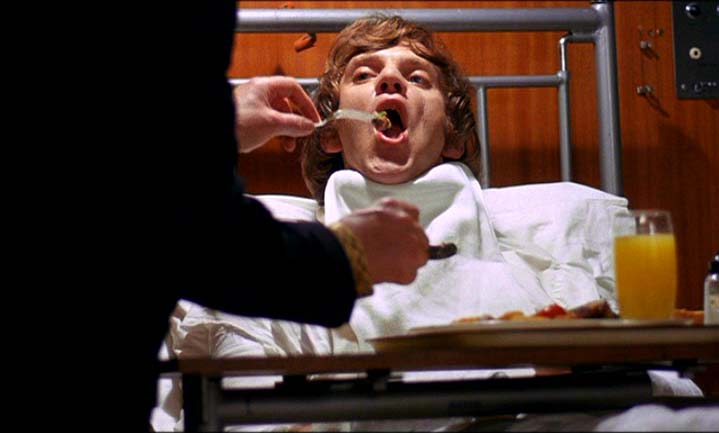
Now, as I mentioned before, my film – education is largely self-made. It depends largely (not uniquely but largely) on two things : what appears on my desk at work and what turns up in the bargain baskets of large DVD stores. Now, before you say anything DO NOT diss bargain baskets. I found the entire works of Jim Jarmusch in a bargain basket once – it was a while back but the price was VERY reasonable. Anyway, because of the randomness of the incoming films there are gaping holes in certain bits of my afore-mentioned education. Akira Kurosawa is one of the greats who actually tumbled into one of those holes. I’m not proud of it however a fact is still a fact… Anyway, Mom had been (almost literally) eating me alive trying to get me to watch Dersu Uzala – her all time favorite movie. She actually went as far as buying me the DVD (not from the bargain baskets). She finally got me to watch it too, although in the end she almost had to sit me down Clockwork Orange style (see here if you don't know what I mean - disclaimer : still does not belong to me in any way, see www.cswap.com for more)and force me to do it (Not out of any open aversion to Akira Kurosawa more due to a decided lack of planning). As you can see it made it to the blog. Cheers Mom.

Now, Dersu Uzala is set in Siberia at the beginning of the 20th century. Our hero is an army cartographer and captain in the Russian army who has been sent to survey and make detailed maps of the Siberian steppes and forests. He has a battalion of soldiers with him for aid and protection but it soon becomes apparent soldiers will not be sufficient to survive in this land that is in fact completely foreign to them. By chance the little group cross paths with Dersu Uzala, an old Goldi (Mongolian) hunter and trapper who lives in the forest. His lifestyle has varied very little from those of his ancestors; he worships the forest spirits and speaks pidgin Russian. The group find him “quaint” and “old fashioned” but it soon transpires that Dersu Uzala is a force to be reckoned with as far as survival is concerned. The Captain will have his life saved, learn many lessons from and find a true friend in Dersu Uzala…

You may imagine that a film directed by a Japanese director telling the tale of an exhibition in Siberia may not contain that much nail-biting tension. But make no mistake there are true nail-biters in this film alongside truly touching moments. Mr Kurosawa has prepared for us a true roller-coaster of emotion and the excitement is so great that even the fact that the film goes on for two and a half hours (it’s a film from a different generation don’t forget) does not bother the modern viewer. In a funny kind of way – and you may not guess it from the beginning – it is a perfect example of Asian cinema. It is not fast-paced, infact you do not feel the pace at all, which is a remarkable achievement. The perspective is not what we are used to and we are introduced (in my case anyway) to the true spirit of Siberia, feel the power of the tigers and fear the deadly blizzards with Dersu. In fact we are introduced – almost experience – a lifestyle lost in the 19th century… It is a poetic yet strong yet very emotional film… It obviously didn’t win an Oscar® for nothing. And Mr Kurosawa did not become a legend for nothing. If like me you somehow missed it, MAKE time for it…